Translate

Showing posts with label Alzheimer's disease. Show all posts

Saturday, February 27, 2016

Why my book is not finished. Excuse # 743


I have come next door to visit Mom and bring her various things: the newspaper, fresh eggs, batteries, a book about Ethiopia, chicken Marbella I made yesterday. I’ve fixed the curtains in her bedroom, and deciphered a name on a piece of mail. (A very old Belgian friend. “I never liked him,” she told me.) Now it is time for me to get going.
Me: Bye Mom.
Mom: Where are you going?
Me: Home, next door.
Mom: Well what for?
Me: I have to get to work.
Mom: Oh? What are you working on?
Me: I am writing a book.
Mom: That’s nice. What is it about.

Me: It’s a novel about a Hungarian man who develops a rare disease and tries to cure himself with horseshoe crab blood, and his ex-wife, who still loves him, but had an unfortunate affair with an ex-felon, and their daughter who is obsessed with language and a boy named Henry.
Mom: Why is he Hungarian?
Me (One foot out the door): It seemed like a good idea at the time.
Mom: Your father and I went to Hungary, but we didn’t like the food.
Me: (Curbing the impulse to tell her that they never went to Hungary, because it is bad form to contradict an Alzheimer’s Assertion, and I know that claiming to have been in every country ever mentioned is a compensatory mechanism for her these days.) It doesn’t take place in Hungary. It mostly happens on Cape Cod.
Mom: What is Cape Cod?
Me: It’s right near where you lived for sixty years. We used to go there in the summers.
Mom: I don’t think so, but if you say so.

Me: Thank you. I’ll see you later.
Mom: What is it called?
Me: What?
Mom: The….. the thing you are writing.
Me: I’ll let you know when it’s done.
Mom: When will it be done?
Me: Never. If I keep answering questions.
Mom: But when can I read it?
Me: When it’s done.
Mom: So when will it be done?
Me: Soon, but now I have to go.
Mom: You never talk to me.


Friday, December 11, 2015

Journalistic License


My mother believes that newspapers in California do not ever, as in never, ever, print any news about the Pope. She believes this the way creationists believe in the 7 literal days, the way children believe in the tooth fairy, the way NRA nutcases believe in the right to bear arms, lots and lots of extremely lethal arms: that is, irrationally and in the face of all science and evidence, because it suits one’s agenda. That is the way my mother believes and insists that California newspapers are entirely remiss in this important news function. She has forgotten the names of several of her grandchildren and the words fence and English muffins, and even pomegranates, but this fact of journalistic dereliction she clings to.

Contradict this assertion at your peril. I know this, as they say, the hard way.

Now that my mother is living at the Little Red House in our backyard, we thought that it would make sense to share our New York Times subscription with her. We would thereby save a few trees and save a few trips to the DPW recycling bins.

So on any given day, when my mother is here for a meal, for a visit, or a dose of filial obeisance, we have variations on this conversation:
MOM: Have you read this yet? I’d like to take it to my house and read it. I want to cut out this article about the Pope, and send to my friend Joan. The newspapers in California never write about the Pope, so she makes copies of the articles I send her and gives them to all her friends. She is a nun. All her nun friends are grateful, because the papers there never write anything about the Pope. Have you read the paper?
ME: Not yet. I will bring it to you as soon as I have.
MOM (scanning the headlines): Have you read this paper yet?
ME: No, Mom, I haven’t. Not yet.
MOM: Well I would like it when you have, because I always cut out articles about the Pope for my friend Joan.
ME: I know.
MOM: So have you read the paper yet?
ME: Not yet. But I will later. What is the Pope up to now?
MOM: I have to read about the Pope and then I will cut it out and send it to Joan. Have you read the paper yet?
ME: Not since you last asked me. (I know I shouldn’t get testy; such testiness flouts the principles of “Habilitation”, but the testiness is coming over me, like a fucking tsunami.)
MOM: I haven’t asked you before.
ME: No, of course not. (I am chagrinned, ashamed.) You take it home with you. I can read it online.
MOM: Oh no. I don’t want to take your paper. I used to have my own paper, at the Orchard. I don’t want to take your paper before you have read it.
ME: Please take the paper, Mom.
MOM: Have you read it yet?

(I can read it online.)

Friday, December 4, 2015

Dispatch from Somewhere Else

First my mother moved in with us for a month.

It is hardly worth mentioning that this was not the original plan and that all has not gone as planned.
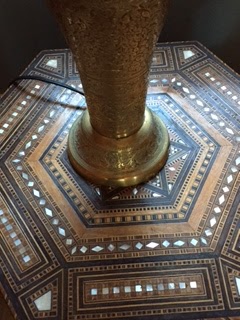
The plan was: Given her diagnosis and the impossibility of her remaining at the Orchard (even with more or less full time care, it is too big; and too full of generations of stuff causing her to be in a state of constant panic; and too far from any of her children) my mother would move into the Red Cottage right next door to us, in our back yard actually. We would make some small but necessary changes. [Such as: weed and prune the garden; repoint the brick patio; plant ferns and ginger and astilbe; remove the fence (dating back to a Draper family feud); redo the bathroom for my mother, seal up one wall, cut a door through another wall; redo the powder room to become a proper bathroom for Mom’s caregivers; paint the exterior of the house: Country Redwood, a red but not, per my mother’s description, a flaming red, but rather a tasteful, Harvard red; paint the interior of the house with colors to match my mother’s fabrics; hang my mother’s brass Cairene lamps, and French chandelier. Small changes.] Then the movers would arrive with her clothes and stuff and furniture and rugs and Egyptian objects, and in a jiffy we would set up the house to resemble the Orchard, in tasteful miniature. Then my brother would drive Mom to New York and she would walk into a house all prepared, move in, and all would be well. She would learn to love Maggie, Ada and Shedley and would even remember to turn left and walk twenty yards to get to our house. And not right and end up stranded a park full of dog walkers and Bocce-playing Croatians.

This is what has really happened so far: Redoing the bathroom turned out to be a larger project, involving: demolition, architectural plans (dear Ned Baldwin, scooting over on his Vespa, telling the electrician that no one listens to what he says), getting a building permit, ordering and acquiring and then returning multiple plumbing items and bathroom fixtures, getting plumbers and plumbing inspectors over, ditto electricians and electrical inspectors, moving large cast iron pipes, getting friendly with a dumpster in the driveway, installing plumbing fixtures, discovering that certain plumbing fixtures won’t fit, going to a large discount appliance store late at night to acquire a washer and dryer unit, visiting Home Depot at least once a day and often twice.

Meanwhile, the movers arrived with my mother’s things and put them in the Red Cottage that was nowhere near ready for habitation. Indoor plumbing being considered the sine qua non of 21st century life.

Meanwhile, my mother stayed with my brother in Boston once her things were moved from the Orchard. We hoped this would prevent a trauma by the egregious disruptions to the house she had lived in for the past 50 years. (Even though the house was, and is, still full of furniture and books and objects of mysterious provenance, and multiple portraits of my French maiden aunt’s sister who died in a flaming car crash with her lover, and a good portion of my mother’s camel collection.)
The plan changed.

After a few days in Boston, my brother would bring Mom here to stay with us while we finished up the Red Cottage. All would be fine. It would allow her to gradually transition to life in Hastings.

Then the weather turned chilly, and we turned on the heat and suddenly there was warm and fecund smell, as of a clutch of newly birthed Amazonian howler monkeys breathing heavily. CSB returned from a foray to the furnace room to report that smoke was pouring from the boiler, in an entirely inappropriate manner, and that he had flipped the emergency shut OFF switch. There would be no heat that day.
My mother stayed on at my brother’s house, while we called the plumber. First he attempted to repair the boiler. Then he told us that he had never seen this particular problem happen with this particular boiler. (A 22-year-old Peerless steam boiler.) In the matter of plumbing problems, uniqueness is pretty much the last thing you want to be saddled with.

What I have not mentioned in that without a functioning boiler, my mother could not stay with us because she is 85 years old, weighs 103 lbs., and needs an ambient temperature of at least 77 degrees.

The plumber was unable to repair the boiler. Something about the metal casing being so shot that it was impossible for the screws to get purchase. So we would have to get a new boiler. In order to get a new boiler, the old one had to be dismantled – that is to say demolished – and removed. For this task, Anton, Jimmy and Nelson arrived. Anton was the head guy. He was originally from Bulgaria and upon seeing our chickens roaming loose in the yard, he told me that back in his Bulgarian hometown his grandmother also had chickens and that she could kill and pluck and truss a chicken in less than five minutes, a record in their Bulgarian village. (I have no idea how that time compares to world records, and I was not about to ask.) Jimmy took lots of cigarette breaks out the back door, and communed with the raccoon (a chicken predator) that CSB had caught the night before in our HavaHart trap. Jimmy wanted to make himself a raccoon skin cap. Nelson was quiet and worked steadily.

It took two days to demolish and remove the old boiler. Meanwhile, the weather became warm. Unseasonably warm for November, and my mother had been at my brother’s longer than either had planned, so he brought her to us in Hastings, where we ensconced her in the large ground floor guest room. Theoretically, if she so chose, she could watch and enjoy the destruction and removal of the old and the installation of the new furnace. Theoretically, she could take walks and do jigsaw puzzles.

Reality-wise, the furnace destruction, removal and installation were all mysterious to my mother, the rituals of a tribe so foreign and idiomatically alien that when she asked for the eleventh time what the plumbers were doing, she nodded and kept talking. (There is so much to be said about plumbing. And so many metaphorical possibilities. But we will leave them for the moment.)

Reality-wise, the 500-piece jigsaw puzzles that had amused her a year ago - a painting of Breughel’s, a New Yorker cover, an illustrated floral alphabet, an Egyptian wall painting - were now too complex. The pieces were too small and indistinct. Though with the fancy jigsaw puzzle tray, with its green baize surface and wooden lip and lazy susan, fewer puzzle pieces ended up on the floor, to be sucked into the maw of the vacuum or chewed laconically by Bruno. So we acquired puzzles with 300 pieces, large brighter pieces. On the box we are told that these puzzles are suitable for ages ten and up. Reading those words on side of the cardboard box I recalled and was haunted by the scene in John Bayley’s memoir, Iris, when Iris Murdoch, his beloved wife, the brilliant novelist and philosopher, now engulfed inside Alzheimer’s, watches teletubbie cartoons. With delight. Was she another person then? Has she lost herself in a tangled mess of neurons? Where is the Iris Murdoch who wrote The Sacred and Profane Love Machine, and The Word Child, and The Severed Head?

Where is my mother who taught us all the intricacies of fenestration? Where is my mother who could distinguish between Gothic revival architecture and Flamboyant Gothic architecture, not to mention Craftsman Gothic, and for whom this mattered?

She appears to be missing in plain sight. The person impersonating her has now moved, after a month in residence here, right next door to the Red Cottage.

Sunday, March 4, 2012

110 years today

Today my grandmother, widely known as Bonne Maman, would be 110. If she were alive. She is not, which means that I get to tell the story of her life any way I choose. Even when she was alive, she generously allowed me to tell the story of her life as extravagantly or comically as I chose. Which should give you an idea of what a delightful person she was.

When Reine Marie Garât was born in Mons, on March 4, 1902, King Leopold II sat on the throne of Belgium. Nowadays, Leopold is best known as the owner of the Congo Free State, about which there was nothing free, and which was one of the most brutal and cruel regimes in history. My beloved grandmother was 8 months old when an intrepid Italian anarchist fired three shots at Leopold, and missed.
Young Reine went to convent school at an early age and there she learned to write with her right hand because, as everyone knows, the left hand belongs to the devil. In order to accomplish this task, the nuns tied her left hand to the chair to prevent her from using it. This technique worked, and Reine had exquisite handwriting all her life. With both hands.
Belgium was occupied during the First World War, and several German officers were billeted at their home outside Antwerp. She pointedly explained to me that one officer was Bavarian and despite the fact of his being the enemy he was a kind man who missed his dirndl and leiderhosen-clad children back home; but the other officer was Prussian and he was cold and stiff-backed and disliked children of any nationality. Or so thought the young Reine.
After the war she married the dark and handsome Karl. His parents did not oppose their marriage: he was Protestant, she was Catholic – because their eldest son had likewise fallen in love with a Catholic young woman, and when their marriage was forbidden, they jumped together from the spire of the Antwerp Cathedral.
When I was 12, Bonne Maman took me on one of those iconic and wonderful European adventures, when grandmothers take their (lucky, privileged) granddaughters to Europe, by boat, mais oui, and tell them stories. We were in Antwerp when she took me to the cathedral and told me about these young lovers who leapt to their death. Then, she told me the young man was her husband’s brother. Then, she told me she had another husband before my grandfather, Bon Papa. It was unbearably romantic. Later we went to visit her first mother-in-law, Karl’s ancient mother, now living in a rococo apartment in – of all places – a convent.
But six months after the war Karl died. On the very last day of the war, and foolishly not wearing his gas mask, Karl gassed as the German army retreated and discharged all their unused weaponry.
As she was a very young widow, Reine’s parents expected that she would return to their home. But she did not. She moved to Brussels and learned to type and translate, and got a job. Her plan was to work, then go to the League of Nations as a translator, and travel the world. But after about 6 years of this, she succumbed to the lure of motherhood, and agreed to marry Arnold, her boss and a charming man. But first he went on a business trip to Argentine and Chile, and sent back photographs of himself, to prove how much weight he had lost.
Soon after they married, Arnold was offered a great job managing an oil company in Alexandria, Egypt. But this would mean moving his new wife to a foreign land, far from the grey skies of Belgium. Reine considered the grey skies of Belgium and the heavy soups, and immediately said that she would love to move to Egypt.
She adored Egypt. She adored the weather, picnics in the desert, palm trees, dates and costume balls. She returned to Belgium for the birth of her first child, my mother, but stayed in Alexandria for the birth of her son, Claude. During most of their years in Egypt, King Farouk I perched on the throne. He was extremely fat (in CIA internal memos he was referred to as FF, for Fat F---er), had execrable taste in furniture and décor, and amassed a world-class collection of pornography. When she deemed me old enough to know such things, Bonne Maman told me how favored members of the European community in Cairo were sometimes invited to a special viewing of Farouk’s porn stash. She implied, but did not say, that naturally she and Bon Papa would never have accepted such an invitation.

Above: Reine shaving Arnold while camping in the Sahara.
In 1952 Gamel Nasser overthrew King Farouk, who then went into exile in Morocco and became even fatter.
I could go on (&on) about the long and checkered history of my grandmother and the monarchy, but time is fleeting, so I will not. Or not this time. Bonne Maman did survive many kings and lame duck princes to become a most beloved grandmother and great-grandmother. In her 80’s she developed Alzheimer’s but continued to be ambidextrous, and charming in French and English, as well as a language known only to herself.
So once again, Joyeux Anniversaire chère Bonne Maman.

Monday, March 14, 2011

A floral bouquet of randomness

I know that it is possible to move a large tree, if you have enough money and large equipment and men with shovels, but as with many things (miracles for instance) I really need to see this operation to believe it.
And we did see it.
Down the road from us is a beautiful stone villa built around 1840 that is being demolished, probably this week.
This is the sort of thing that upsets CSB.
CSB does things like salvage wavy old glass from demolition sites in order to have a supply of historically correct glass available to replace any broken panes we might incur. Did you know that an expert can date a pane of glass by the degree of waviness and distortion? Many of the windows in our house go back to the late 18th or early 19th century, and for them we need glass that is thicker (about 1/8th”) and more distorting. Hence we have a stash of old glass in the shed.
But to return to large trees on the move. The stone house that is about to be no more is surrounded by several massive wisterias. And they are being dug up and stored in enormous wooden boxes. In order to expose the roots, they first had to dig holes about the size of station wagons. Several holes, one for each separate plant. Then the root ball, about the size of a VW bug, is bundled. Then comes the heavy machinery.
Unlike so much else that we hold dear, wisteria is actually native to the eastern United States. Depending on whom you ask, it was named for Dr. Caspar Wistar or Charles Jones Wister, Sr, both of Pennsylvania. But as you can see, the names are spelt differently, and that signifies.
Massive as the uprooted wisterias down the road are, they are mere fledglings compared to the largest wisteria in the US. That one is in Sierra Madre, California and covers an entire acre and weighs 250 tons.
Because of its ability to climb either clockwise or counterclockwise, wisteria is the Patron Plant of the Ambidextrous.

Saint Seraphina, or Fina is not the patron saint of white violets, but she should be. (This is not an entirely arbitrary sequitur; her feast was 2 days ago.) During her short lifetime (1238-1253) she was known chiefly for her illness and her determination to increase her suffering. She refused to rest in a bed, and instead insisted on lying on an oak plank, where she remained for 6 years in one position. Beneath her the wood rotted and was filled with worms, but still she did not move. Then she died and the townspeople moved her body and discovered that the formerly rotten wood was now a field of sweet-smelling white violets. That is the sort of miracle I think must be seen to be believed. The best we can offer is Ghirlandaio’s famous painting. In San Gemignano, where she lived, white violets bloom about the time of feast day.
We are not in Sam Gemignano, so the chicken yolks are not bright orange and we have snowdrops in bloom. Every year around this time I head for the woods to find the snowdrops (galanthus nivalis). Because memory and its losses are much on my mind these days, when I remember, I have been very excited to learn that galantamine, an extract made from the flower and bulbs of snowdrops, can be used to treat Alzheimer’s. But that is not all.
I had never heard of Lucid Dreaming, or not as a distinct phenomenon, separate from plain old dreaming. That is, I regularly dream and I am occasionally lucid. Lucid Dreaming has its own entry in Wikipedia. Lucid Dreaming has given rise to some very delightful acronyms: WILD, DILD and MILD, meaning Wake-Initiated Lucid Dreaming, or Dream etc or Meditation etc. And galantamine (C17H21NO3 ) is also taken to induce Lucid Dreaming. Which makes me wonder why we don’t have the acronym GILD. But not as much as I wonder how the same drug can be used to treat Alzheimer’s and induce super-vivid dreams or oven out-of-body experiences (OBE’s).

Saturday, April 18, 2009

Lost, lost


Last night I wanted to find out when I had last been to the dentist, a mundane task, but a compelling one. And it was going to be easy: I would just go into my trusty iCal and scroll backwards. Well I scrolled backwards and after February 14, or rather before February 14, there was nothing. No events at all. I looked everywhere that one can look in a computer which is almost nowhere at all, but the events were gone.

S0 of course I am thinking of my father and his half-century of lost memories.
There is no patron saint of memory loss. Not officially. But there is of course St Anthony for lost items. (Not the Saint Anthony tempted in Dali’s painting, but the other one, the benign one always pictured with a baby, or a piglet. And I’ve no clue why the patronage of lost items.)
Bonne Maman, my beloved Belgian grandmother whose version of Catholicism was personal and idiosyncratic (and possibly idolatrous), was a devotée of St Anthony, largely for his uncanny ability to find lost objects, or cause them to be found. I wish I could manifest a modern skepticism on the subject, but it is hard. One of them – either my grandmother or Saint Anthony - really could find what was lost.
Or they did until Alzheimer’s took over Bonne Maman’s brain and decimated it, and then everything was lost, memory, language, and finally self. I don’t hold Saint Anthony responsible for her illness, though there were times when I was furious, when this terrible disintegration of the brain, this collapsing of synapses and this theft of a lifetime’s stories, seemed the cruelest thing and a negation of saintly intervention.
Meanwhile I bemoan my lost record of dentist appointments, haircuts, movies seen, parties, revelries, and physical therapy. Knee surgery has disappeared, along with trips to Bolivia and Alsace, along with a marriage that is already over, beekeeping classes and Literature Club meetings. I can’t bring myself to pray to Saint Anthony, not today.

So here is a fact that will neither find my missing calendar nor explain Saint Anthony’s patronage, but CSB will like it because he is longing to get pigs on our (still unnamed) farm. The smallest pig in the litter (the runt), or the favorite, is called the Tantony pig, short for Saint Anthony’s pig. Even though spellcheck disapproves, it’s a real word.

Thursday, February 26, 2009

Seeking snowdrops


I went out seeking the snowdrops today. Somewhere in the woods between the house and the road here is an old patch of snowdrops (Galanthus nivalis). Not really woods, just an un-landscaped slope that was woods long ago, then farmed, and then allowed to do whatever it wanted and it wanted to hang on to this secret patch of snowdrops. Hidden in plain sight.
Every year I go to this spot, clambering over a large fallen tree, and then another smaller fallen tree, and very year I think there are none. The ground is covered with the soggy fallen leaves of autumns past and a few tawdry bits of old snow. What I need to do is stand still. Stay in one spot and let my eyes comb the ground as if it were my dog’s fur. And expect nothing. And slowly – but also suddenly – a snowdrop will appear. I will pluck off the brown leaves and see dozens on them. Today most were closed tight; even beneath the leaves they seemed to be protecting their privacy.
I read that snowdrops have an active substance called Galanthamine that can be helpful in the treatment of Alzheimer’s disease. Since at least once every day I have a Panic-stricken-I’m-losing-my-memory moment, and since like 90% (something like that – I’ve forgotten the exact percentage, naturally) of the population I am more frightened of getting Alzheimer’s than cancer, this item called out to me from its secret place, from its morass of fallen leaves. It makes a certain sense that a plant that would allay the symptoms of Alzheimer’s would be a plant that keeps its own counsel, and is a harbinger of spring, a flower that blooms when there is still snow on the ground. If you have the patience to see it.