Translate

Friday, December 11, 2015

Journalistic License


My mother believes that newspapers in California do not ever, as in never, ever, print any news about the Pope. She believes this the way creationists believe in the 7 literal days, the way children believe in the tooth fairy, the way NRA nutcases believe in the right to bear arms, lots and lots of extremely lethal arms: that is, irrationally and in the face of all science and evidence, because it suits one’s agenda. That is the way my mother believes and insists that California newspapers are entirely remiss in this important news function. She has forgotten the names of several of her grandchildren and the words fence and English muffins, and even pomegranates, but this fact of journalistic dereliction she clings to.

Contradict this assertion at your peril. I know this, as they say, the hard way.

Now that my mother is living at the Little Red House in our backyard, we thought that it would make sense to share our New York Times subscription with her. We would thereby save a few trees and save a few trips to the DPW recycling bins.

So on any given day, when my mother is here for a meal, for a visit, or a dose of filial obeisance, we have variations on this conversation:
MOM: Have you read this yet? I’d like to take it to my house and read it. I want to cut out this article about the Pope, and send to my friend Joan. The newspapers in California never write about the Pope, so she makes copies of the articles I send her and gives them to all her friends. She is a nun. All her nun friends are grateful, because the papers there never write anything about the Pope. Have you read the paper?
ME: Not yet. I will bring it to you as soon as I have.
MOM (scanning the headlines): Have you read this paper yet?
ME: No, Mom, I haven’t. Not yet.
MOM: Well I would like it when you have, because I always cut out articles about the Pope for my friend Joan.
ME: I know.
MOM: So have you read the paper yet?
ME: Not yet. But I will later. What is the Pope up to now?
MOM: I have to read about the Pope and then I will cut it out and send it to Joan. Have you read the paper yet?
ME: Not since you last asked me. (I know I shouldn’t get testy; such testiness flouts the principles of “Habilitation”, but the testiness is coming over me, like a fucking tsunami.)
MOM: I haven’t asked you before.
ME: No, of course not. (I am chagrinned, ashamed.) You take it home with you. I can read it online.
MOM: Oh no. I don’t want to take your paper. I used to have my own paper, at the Orchard. I don’t want to take your paper before you have read it.
ME: Please take the paper, Mom.
MOM: Have you read it yet?

(I can read it online.)

Friday, December 4, 2015

Dispatch from Somewhere Else

First my mother moved in with us for a month.

It is hardly worth mentioning that this was not the original plan and that all has not gone as planned.
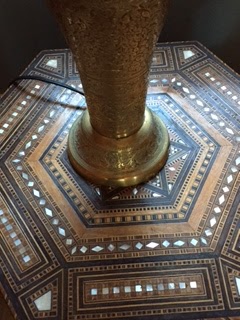
The plan was: Given her diagnosis and the impossibility of her remaining at the Orchard (even with more or less full time care, it is too big; and too full of generations of stuff causing her to be in a state of constant panic; and too far from any of her children) my mother would move into the Red Cottage right next door to us, in our back yard actually. We would make some small but necessary changes. [Such as: weed and prune the garden; repoint the brick patio; plant ferns and ginger and astilbe; remove the fence (dating back to a Draper family feud); redo the bathroom for my mother, seal up one wall, cut a door through another wall; redo the powder room to become a proper bathroom for Mom’s caregivers; paint the exterior of the house: Country Redwood, a red but not, per my mother’s description, a flaming red, but rather a tasteful, Harvard red; paint the interior of the house with colors to match my mother’s fabrics; hang my mother’s brass Cairene lamps, and French chandelier. Small changes.] Then the movers would arrive with her clothes and stuff and furniture and rugs and Egyptian objects, and in a jiffy we would set up the house to resemble the Orchard, in tasteful miniature. Then my brother would drive Mom to New York and she would walk into a house all prepared, move in, and all would be well. She would learn to love Maggie, Ada and Shedley and would even remember to turn left and walk twenty yards to get to our house. And not right and end up stranded a park full of dog walkers and Bocce-playing Croatians.

This is what has really happened so far: Redoing the bathroom turned out to be a larger project, involving: demolition, architectural plans (dear Ned Baldwin, scooting over on his Vespa, telling the electrician that no one listens to what he says), getting a building permit, ordering and acquiring and then returning multiple plumbing items and bathroom fixtures, getting plumbers and plumbing inspectors over, ditto electricians and electrical inspectors, moving large cast iron pipes, getting friendly with a dumpster in the driveway, installing plumbing fixtures, discovering that certain plumbing fixtures won’t fit, going to a large discount appliance store late at night to acquire a washer and dryer unit, visiting Home Depot at least once a day and often twice.

Meanwhile, the movers arrived with my mother’s things and put them in the Red Cottage that was nowhere near ready for habitation. Indoor plumbing being considered the sine qua non of 21st century life.

Meanwhile, my mother stayed with my brother in Boston once her things were moved from the Orchard. We hoped this would prevent a trauma by the egregious disruptions to the house she had lived in for the past 50 years. (Even though the house was, and is, still full of furniture and books and objects of mysterious provenance, and multiple portraits of my French maiden aunt’s sister who died in a flaming car crash with her lover, and a good portion of my mother’s camel collection.)
The plan changed.

After a few days in Boston, my brother would bring Mom here to stay with us while we finished up the Red Cottage. All would be fine. It would allow her to gradually transition to life in Hastings.

Then the weather turned chilly, and we turned on the heat and suddenly there was warm and fecund smell, as of a clutch of newly birthed Amazonian howler monkeys breathing heavily. CSB returned from a foray to the furnace room to report that smoke was pouring from the boiler, in an entirely inappropriate manner, and that he had flipped the emergency shut OFF switch. There would be no heat that day.
My mother stayed on at my brother’s house, while we called the plumber. First he attempted to repair the boiler. Then he told us that he had never seen this particular problem happen with this particular boiler. (A 22-year-old Peerless steam boiler.) In the matter of plumbing problems, uniqueness is pretty much the last thing you want to be saddled with.

What I have not mentioned in that without a functioning boiler, my mother could not stay with us because she is 85 years old, weighs 103 lbs., and needs an ambient temperature of at least 77 degrees.

The plumber was unable to repair the boiler. Something about the metal casing being so shot that it was impossible for the screws to get purchase. So we would have to get a new boiler. In order to get a new boiler, the old one had to be dismantled – that is to say demolished – and removed. For this task, Anton, Jimmy and Nelson arrived. Anton was the head guy. He was originally from Bulgaria and upon seeing our chickens roaming loose in the yard, he told me that back in his Bulgarian hometown his grandmother also had chickens and that she could kill and pluck and truss a chicken in less than five minutes, a record in their Bulgarian village. (I have no idea how that time compares to world records, and I was not about to ask.) Jimmy took lots of cigarette breaks out the back door, and communed with the raccoon (a chicken predator) that CSB had caught the night before in our HavaHart trap. Jimmy wanted to make himself a raccoon skin cap. Nelson was quiet and worked steadily.

It took two days to demolish and remove the old boiler. Meanwhile, the weather became warm. Unseasonably warm for November, and my mother had been at my brother’s longer than either had planned, so he brought her to us in Hastings, where we ensconced her in the large ground floor guest room. Theoretically, if she so chose, she could watch and enjoy the destruction and removal of the old and the installation of the new furnace. Theoretically, she could take walks and do jigsaw puzzles.

Reality-wise, the furnace destruction, removal and installation were all mysterious to my mother, the rituals of a tribe so foreign and idiomatically alien that when she asked for the eleventh time what the plumbers were doing, she nodded and kept talking. (There is so much to be said about plumbing. And so many metaphorical possibilities. But we will leave them for the moment.)

Reality-wise, the 500-piece jigsaw puzzles that had amused her a year ago - a painting of Breughel’s, a New Yorker cover, an illustrated floral alphabet, an Egyptian wall painting - were now too complex. The pieces were too small and indistinct. Though with the fancy jigsaw puzzle tray, with its green baize surface and wooden lip and lazy susan, fewer puzzle pieces ended up on the floor, to be sucked into the maw of the vacuum or chewed laconically by Bruno. So we acquired puzzles with 300 pieces, large brighter pieces. On the box we are told that these puzzles are suitable for ages ten and up. Reading those words on side of the cardboard box I recalled and was haunted by the scene in John Bayley’s memoir, Iris, when Iris Murdoch, his beloved wife, the brilliant novelist and philosopher, now engulfed inside Alzheimer’s, watches teletubbie cartoons. With delight. Was she another person then? Has she lost herself in a tangled mess of neurons? Where is the Iris Murdoch who wrote The Sacred and Profane Love Machine, and The Word Child, and The Severed Head?

Where is my mother who taught us all the intricacies of fenestration? Where is my mother who could distinguish between Gothic revival architecture and Flamboyant Gothic architecture, not to mention Craftsman Gothic, and for whom this mattered?

She appears to be missing in plain sight. The person impersonating her has now moved, after a month in residence here, right next door to the Red Cottage.

Thursday, August 20, 2015

Overheard as I departed the local swimming pool

Adorable child #1:
OK, this is a gross question. But would you rather have hair made of tongues or a tongue made of hair?
Adorable child #2:
Definitely hair made of tongues, because then I could lick ... (unfortunately lost in the nearby cannonball.)

I recalled this exchange yesterday morning when I was stung by a yellowjacket (just above what I judge to be the navicular tarsal bone. Thanks for asking.)and in the interests of discovering exactly how much pain I was in, I consulted the Schmidt Sting Index, where I learned that the pain of a yellowjacket's sting is comparable to "W.C. Fields extinguishing a cigar on your tongue."

What did those adorable children know?

Friday, August 7, 2015

How to find a car and what to do then

Because it is summer time and one of the great pleasures of summer is pink wine, I went to Stew’s Wine Shop to get some cases of this year’s vin d’été .
Each year’s vin d’été is chosen by the following scientific method: sometime in early June I buy a selection of this year’s crop of vins de Provence priced under $11, and test them. This involves inviting friends over and then drinking lots of pink wine. If we also eat bread and cheese and fried zucchini blossoms, that is a good idea. Then I buy several cases of the favorite. Sometime I have two favorites at the beginning of the summer, but by the end of the summer it will be whittled down to one. Without fail.)
I got just a little carried away in Stew’s Wine Shop, so when the time came to push my cart out to the parking lot, it was remarkably heavy and unwieldy. Luckily a young man with a charming gap-tooth smile and a rather apt port wine stain at the corner of his left eye volunteered to help. (His nametag read: I am Grover. How can I help?)
Together we walked out to the parking lot. I couldn’t see my car anywhere. Not in the row where I recalled parking. Nowhere. There are certain triggers to Alzheimer’s Onset Anxiety: forgetting the word for the weird fruit bush that CSB fell into when they lived in Georgia (scuppernongs), or forgetting the name of the reservoir upstate that flooded my friend’s ancestral home (Ashokan), or losing my car in a parking lot. More or less everything makes me worry about the onset of Alzheimer’s, which is a problem for CSB who would rather undergo knee surgery sans anesthesia than ever hear the word Alzheimer’s again. (But he doesn’t have a choice, either way.) So there I was in the Stew’s parking lot, getting a little diaphoretic, imagining the kind of things the helpful Grover would be thinking about this woman in turquoise Birkenstocks with a shopping cart full of Mas Fleury, Cotes de Provence, who couldn’t find her own car in the parking lot. Things like: when did they let her out of Milledgeville?
Then I remembered that I had not driven my own car to Stew’s. My car was getting an oil change at the service station, so I was using one of my nephew’s cars. Two of my ten nephews live in NYC and own Subaru station wagons of varying vintages. They both park their cars in my driveway because that is much cheaper than paying to park in a lot, or parking on the street and getting lots of tickets; and since they don’t use their cars for months at a time, my driveway has become their home away from home. One has New Hampshire license plates (LIVE FREE OR DIE), and one has Maine (VACATIONLAND) license plates. That is how I tell them apart, the cars, not the nephews. Once I realized that I was not looking for a red Subaru, but a greyish Subaru declaring its willingness to die, I felt much better, and in no time at all we arrived at the car. I popped open the trunk, and Grover stood at the ready.
We both realized rather quickly that there was no room for even a single case of wine in the trunk, because it was full of extra large fire extinguishers. (There were also coils of rope, axes and a life buoy, but those could have been consolidated enough to allow for wine storage.)
From the looks of them these were brand new fire extinguishers. I actually knew, or suspected what these fire extinguishers were for and why they were there, but just then that did not seem to be my dilemma. What seemed most important just then was to act as if I knew those fire extinguishers had been there all along and I had just momentarily forgotten about them. I worried that if I acted startled to see them taking up the space I had planned to fill with cases of pink wine, coupled with my previous difficulty in finding the car, that Grover might then begin to think this wasn’t my car at all; he might suspect that in addition to being a pink-wino, I was a car thief. Or if he didn’t think that, he would suspect me of engaging in some sort of arson-related activities, but being so cluelessly focused on procuring my pink wine that I had forgotten my car was full of the tools of my trade. Whatever that might be.
“Of course we can’t put the wine back here! We’ll put it in the back seat.”
I opened the back door. Grover inserted the several cases of wine. I considered offering him a free fire extinguisher for his trouble, but decided against it.
The fire extinguisher fun didn’t stop there. That evening, the nephew whose car it was took the train up from the city in order to retrieve his vehicle and drive up to the north woods. Apparently he too had forgotten about the presence of fire extinguishers in the back of his car (LIVE FREE OR DIE). Or so I gathered from the look on his face when he opened the rear door and discovered that there was no room for his ‘gear’. He then conceived of the plan to remove all the fire extinguishers from the back of his car (LIVE FREE OR DIE) and temporarily lodge them in the back of his cousin’s car (VACATIONLAND). He set about performing this translation, and in the process ignited, or activated, or set off one of the extinguishers. Suddenly, the back of his car was filled with pressurized nitrogen, in a white powdery form that would have extinguished a fire, had there been a fire in the back of his car. (LIVE FREE OR DIE). Being as there was no fire in the back of the death-seeking car, said nephew then spent a good part of the evening cleaning up the wasted nitrogen.


Has anyone found a piece of yellow paper?

Monday, July 20, 2015

I have left my translating (of Les Sept Faux Departs; see below & then below) at home, and I am driving down the Henry Hudson Parkway, back to Mt Sinai/Roosevelt hospital where CSB has just had his left knee immobilized, scored, sliced open, dismantled and replaced with a Stryker titanium knee. Engineering is a wonderful thing. Translation is something else.

Since I left his hospital room yesterday evening, CSB has acquired a roommate. More than one roommate: There is an older man who had a hip replacement, and there is the elderly wife who never leaves his side. She spent the night sleeping (badly I presume) in the chair next to his bed. Should I too have devotedly overnighted in the hospital? Should I have spent the hours fitfully dreaming and worrying about MRSA and C. diff and the myriad forms of antibiotic resistant infections that lurk in hospitals like pickpockets in 19th century London, while CSB dozed in narcotic indifference?
Perhaps I should have. I did not. I kissed CSB good night and went home and watched a French movie with subtitles, because he wasn’t there to object.

So this morning I meet the roommates for the first time. We don’t exactly meet. They are both Bulgarian and only speak Bulgarian. CSB learned this from the Russian-speaking physical therapist who told him that Russian is similar to Bulgarian and so he tried to communicate with the couple. All three of them now seem confused, and locked in their lonely territories of incomprehension.

According to the last census there are at least 4000 Bulgarians in NYC, and surely many of them speak excellent English. But they are not here today. I am pretty sure that more Bulgarians speak English than Americans speak Bulgarian, for many reasons, an important one being the fact that a Bulgarian verb can have up to 3000 forms, because its variations include not only person, tense, number and voice, but also aspect, mood and gender. Bulgarians use the Cyrillic alphabet, the very same one created by Saints Cyril and Methodius in order to translate the Bible from Greek into Old Slavonic. In terms of ease of language acquisition, it probably makes no difference that Bulgarian lacks the other Serbo-Croatian languages’ phonemic vowel length and alveo-palatan affricates.

Given their mutual confusion, I have no idea how the Russian-speaking therapist has gleaned that the Bulgarians speak French, and that they were, once upon a time, French teachers. CSB, who normally would rather be deep-fried in a vat of bubbling cottonseed oil than call attention to himself, interjects that his wife speaks French.
Meaning: moi.
He does not say that she was just this morning translating her grandfather’s memoir from French into English, and that is good thing, because it might give the impression that I actually know a thing or two about translating.

Here is what I know: when the relics of a saint are moved from location to another, often by heavenly, angelic means, they are said to be translated.

So now there are 4 of us in the little cubicle: 2 Bulgarians, 1 Russian-speaking physical therapist, 1 sort-of-French speaking American. The R-S PT wants to explain to the Bulgarian man that he will be moved from his present location, our present location on the 10th floor, down to Rehab on the third floor. I repeat this in French. This is not as simple as it sounds.
First we have to establish that we are now on the tenth floor and why should the Bulgarian know that since he was drugged when he rolled here on a gurney after surgery?
Failing any real comprehension on the matter of moving down seven floors, the therapist wants me to inquire about the Bulgarian’s pain. Ask him if he has pain? he says.
With trepidation I say, Avez vous douleur? This seems to be simultaneously a deeply intrusive and a profoundly obvious and perhaps even a stupid question.
Didn’t the Buddha say that All life is suffering?
Of course he has pain. He is a Bulgarian on the tenth floor of a hospital in New York City, alienated from his homeland, far far away from the Rhodope Mountains, with their vertiginous river gorges and sculptural caves. His wife has dementia and she won’t leave his side. He has left behind the ancestral place of Dionysian rites to live in a New York suburb, where Bakelite was invented in 1906.
What did he say? asks the Russian speaking physical therapist.
I don’t know. It didn’t sound like French to me.
Ask him again about the pain.
Monsieur, avez vous douleur? Le therapiste aimerait savoir.
No, says the Bulgarian.
He says no, I tell the therapist.
Does he understand he’s being moved downstairs?
I ask him if he understands. The Bulgarian says he doesn’t want to go anywhere.
The therapist wants me to assert that he will have to move in order to get rehab. Then – and it seems to me we have gone about this backwards – he asks how many stairs the Bulgarians have at home. Many, as they live on the third floor of a three-story house in Yonkers.

He doesn’t say, Ask him if his hip hurts, and I am relieved because at this moment I cannot think of the French word for hurt.* The word for pain, however, is the same as the word for sorrow…all from the Latin dolor, a word that always puts me in mind of Mater Dolorosa, the sorrowing Virgin Mother. He did not say, Ask him if he suffers. Est-qu’il souffrir?
All Life is Suffering, says the Buddha. Or that is just one translation from the Sanskrit. Another might be, All Life is Pain. And there would be a difference.
Translation is tricky.

The therapist has to leave now, and it is unclear if anything has been accomplished or communicated. No, it is not unclear. It is clear that only confusion and anxiety have been left behind, like medical wastes and latex gloves to be deposited in the ubiquitous medical waste depositories. Hospitals generate the most amazing amount of waste. I don’t know the numbers, the tonnage, the acres of land fill required, but I know that it is amazing, and too much.
The Bulgarians graciously express gratitude. For what? This is embarrassing, shaming even. I have translated badly, gleaned nothing, clarified nothing and like the endless stream of medical waste, only added to their confusion and worries. I return the few feet past the dividing curtain to CSB, in Bed B.
Still anaesthetized by the nerve blocker, he is feeling no pain. Not yet. We speak the same language, most of the time.


*To hurt (transitive) is faire mal, which looks a lot like to do evil. To be hurt is d’être blessé, which is the same thing one would say to mean: to be wounded.
Translation is tricky.

Friday, July 17, 2015

First they kill off the Mothers

I thought that before reading Go Set a Watchman and weighing in on the troubling questions of Atticus’s fall from his pedestal, and whether Harper Lee wanted the book to be published at all, I would reread To Kill a Mockingbird. Because I had either read it so long ago, or, I only imagined I had read it but knew the story well enough because the book and its plot and Gregory Peck as Atticus are woven into our collective psyches.
So yesterday I read To Kill a Mockingbird and Scout is still a tomboy and Atticus is achingly upright and moral. But then I got sidetracked by another troubling question: why is it that in so many iconic stories with a young female protagonist, the mother is dead? Must the mother be dead in order for the father to bond with the daughter? Must the mother be dead in order for the daughter to achieve narrative autonomy?
Everywhere I looked in the vast and chaotic bookshelf of my memory, I found daughters and fathers, and no mothers. Nancy Drew & Pippi Longstocking were most likely the two characters I most longed to be when I was a child, a child with a very present mother and a mostly absent father. A child in training to contribute mightily to the coffers of psychiatric professionals.
And then so many others:
Emma Woodhouse
Cordelia & Miranda
Nora, Hedda and more or less all Ibsen’s heroines
Miranda in The Tempest
Cinderella, Snow White, Donkeyskin, Beauty and the Beast, Hansel and Gretel and almost every fairy tale I can think of. But they are complicated by the inevitably wicked stepmother.
A quick Internet search (“Motherless female protagonists”) reveals that this is hardly a singular observation.

I can well imagine why this trope is so common in novels. Absent the mother the daughter can grapple with the novel’s dilemma on her own and cement the relationship with the father. Absent the wife, the father pays attention to the daughter in a way he might not have otherwise. Kill off the mother, offstage before the story starts, or onstage in an early chapter, and you have already engineered a compelling novelistic dynamic.
But given that this is the construction of so many of the stories that inhabit the childhood landscape, what is the reader with a living and powerful mother to do?