Translate

Showing posts with label harvard. Show all posts

Monday, June 3, 2013

My mother and Moby Dick

Here is something I need to remember for future reference: my mother does not like Moby Dick as much as I do. The truth: she pretty much hated every minute reading Moby Dick for her class at Harvard. What she had to say about the pleasures of cetological lore does not exist. What she disliked about whale minutiae and viscera would fill the brain of a sperm whale to capacity. (And yes, the sperm whale brain, at 17 pounds, is five times larger than the human brain and has a volume of 8000 cubic meters.)

The only good thing about Moby Dick, as far as my mother is concerned, so far as I can tell, is the fact that the Pequod’s first mate’s name is Starbuck, he of “deep natural reverence [and] wild watery loneliness”, and this means that every time she passes a Starbucks coffee shop she can allude to this convergence of names, each time as if for the first time. Given that there are 13,279 Starbucks in the USA alone, this is an opportunity unlikely to expire. (The founders initially wanted to name their company Pequod, which I would have voted for; this gives you an idea of my business savvy.)

I, on the other hand, consider Moby Dick to be the greatest American novel and one of the funniest novels ever; the novel that keeps on giving. I like Moby Dick so much that I wrote a short story about a character who may or may not resemble the writer, who is obsessed with Moby Dick and spends an entire summer - a summer rife with dramatic life changes – alluding to Melvillian wit and wisdom. (You can read this story, “No I am not a Loose Fish, and Neither Are You”, in the 2006 issue of the Southwest Review,Volume 91,Number 3, which, alas, is not available on line.)

So why did my mother find herself reading Moby Dick?
My father loved taking classes and he loved to be around interesting people. And if there were no interesting people on hand, he was happy to be around uninteresting people. He liked to be around people, and he didn’t much like being left alone. He loved school as a young man, and excelled; his only complain about his undergraduate years at Harvard was that his time there was too brief, having been interrupted by his service during WW2.

My mother likes to give lectures and generally prefers to be around very few people, for short periods of time. Some people she would prefer to never be around.

In the decade before he died Dad enrolled at HILR, Harvard Institute for Learning in Retirement, which allowed him to take classes about current events, environmental degradation, Shakespeare’s plays and modern novels, and be around people. A good day at HILR involved a class discussion on Islam and Petroleum, lunch with an attractive female grandchild and her attractive roommates, then an afternoon class tracing the causes of Climate Change to the Protestant Reformation. He once took a course called the “Traditions of Mysticism and Christianity and Islam” and called me once a week to explain the reading and, please, to write a prĂ©cis of the 800 page tome assigned that week. But he kept going to class. Only a national emergency or death could stop him from going to class and lunching with an attractive granddaughter.

The only course he actively resisted taking was “This is Your life: Memoir Writing”, and it was the one course above all others I begged him to take.

But for all their love and devotion, my parents were apparently clueless about each other’s social preferences. Which explains why my father persuaded, urged, hectored and implored my mother to join him in taking classes at HILR. Naturally he wanted her company – even though they wisely never took the same course. He also believed, or wanted to believe, that after his death - and he knew quite well he would predecease her, and soon - she would enjoy the classes and the collegiality of HILR. Even his children, their children, could have told you this was delusional.

Nowadays, my mother likes to tell people she took the Moby Dick class because Philip chose it, and she wanted to honor his choice. I don’t contradict her. But in fact she didn’t even look at the catalog until after his death. I know because I was there with her, and in the matter of taking classes, I am more like my father than my mother, so I was drooling over possibilities like the “Philosophy of Yoga”; “T.S. Eliot, Evelyn Waugh and Other Catholic Converts”; “Anti-Matter and Alexandrine Meter”; “The Last String Quartets of Beethoven”. You get the idea.
And so I must take responsibility slash blame for my mother signing up for Moby Dick, and “The Philosophy of Yoga”. (She dropped the P of Y after the second week.) But she stuck with Moby Dick, more or less. More, because she never actually dropped out. Less, because she never finished the book and so never got to Chapter LXXXIX on “Fast-Fish and Loose-Fish”, in which all of jurisprudence and human history is explained, brilliantly and hilariously, in the context of harpooned whales.
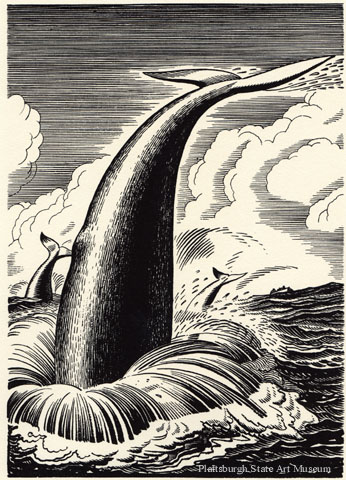
Something else I would do well to remember in the future: just because we have the same taste in chocolate and shoes does not mean that my mother and I will find the same books, or classes, interesting. Moby Dick could be the 63-ton tip of that iceberg.

Saturday, January 12, 2013

The Hollandaise Theory of Life

A little before Christmas, I came up from New York and helped move Dad from the hospital into a rehab facility. With his usual optimism and determination, he intended to do extra physical therapy in order to be home with Monique and good scotch sooner than predicted.
Upon discovering that his room came equipped with an actual television, he asked us to find the PBS News Hour. As it happens, the PBS news hour is not aired 24 hours a day.
What was showing on that wintry afternoon was a vintage cooking show. The most vintage and venerable cooking show of them all. Julia Child, wise Francophile giantess with the mid-Atlantic vowels and a fearless way with a whisk.
What you need to know about a proper hollandaise sauce, and what Dad and I learned that afternoon from Julia Child, is that an egg yolk can only absorb so much butter, and no more. If the sauce is too buttery, you must whisk in another golden egg yolk, and when the sauce is too eggy, you whisk in more butter. Julia continues this dialectic, this dance of the ingredients, until the sauce has reached the perfect consistency and flavor, and then, as she would say, Bon Appetit.

In other words, Julia cooked as Dad ate. Confronting a selection of stinky cheeses after a good meal, he needed the accompaniment of a good red wine. And then like Julia Child, he kept ratcheting upward in order to maintain the appropriate ratio of wine to cheese. He performed this balancing act with meat and gravy, with salad and salad dressing – he was the only person I know who finished off his salad dressing with a fork - with meringues and whipped cream, with sardines and beer. What mattered was ending the meal in harmony, where all the food was finished and all were satisfied.

Is it too much of a stretch to say that he sought and achieved the same balance, of taste and texture, of meat and gravy, of savory and sweet, in his life? His first eight decades were spent building up his textile waste company, seeking sources of raw material all over the world – often in the kinds of places where he would be served rabbit heads for dinner, and yes, he appeared to enjoy it all, even the eyes, a delicacy. He worked hard because he loved his work. There was no occasion too random that he could not steer the conversation to possible uses for recycled fibers, or the price of Rainforest coffee, or the sugar quota. He started each morning with a Cheery Good Morning that was famous on five continents, and pored over inventory spreadsheets with his first cup of coffee.

Then at 80 he suffered his first stroke, and once it appeared that he would survive it, he settled in and savored the yin of life. With his constant traveling curtailed, he stayed at his beloved Orchard, he went back to his beloved Harvard and became a ‘Learner in Retirement’. And back at Harvard he enjoyed weekly lunches with the succession of (mostly vegetarian!) grandchildren who followed in his footsteps there. In his 9th decade he even read a few, - admittedly only a few, admittedly only those written by a close relative - books of fiction.

After 8 decades as an omnivore who generally declined dessert, in his 9th decade Dad developed a sweet tooth. He came to enjoy the tip-of-the- tongue sweetness offered at the end of the meal. He savored pear tarts, Tres Leches in Nicaragua, Cata’s apple pie, fresh honeycomb, chocolate chip cookies and ice cream with crushed brandy snaps.

He balanced the meal.

Even his death was the balancing act, manifesting of the Platonic ideal of Moderation in All Things, including Moderation. Having decided with Monique and his children that he was sick and tired of crises that meant being rushed to the ER and being painfully prodded with needles, Philip came home for good. He spent a week in state in his old bedroom. All five of us were there, every day, reading him the OpEds from the Times and poems of Yeats and Kinnell. Carl, he of prodigious memory, recited Robert Service. Dad listened to Maria Callas singing Verdi and Brigitte singing hymns. On his last day on earth he was visited by his dear friends from Central America, who brought him blessings and love from the coffee farm he so loved; and that evening he peacefully passed away surrounded by all his children, one intrepid grandson, and his still beautiful wife of sixty-one years.
The life is done. His plate was clean.

Sunday, March 18, 2012

Found and Lost

On the most recent Orphean voyage into the parental basement, I found several items of interest, or at least fleeting interest, or passing interest, and some of no interest at all, but I will not mention them.
Among the items in the first categories are:
• Rand McNally 1929 Auto Road Map of the New England States, in which the following roads frequented by me do not appear: Saw Mill Parkway, Routes 684, 84, 95, Massachusetts Turnpike. What does appear: Route 9 threading north from NYC through the western side of Westchester.
• 13 pictures of H.G Wells extracted from newspapers and magazines
• Jeroboam of Chateau La Tour du Pin Figeac Saint-Emilion 1962 (I have Googled this vintage and it appears that people are still paying money for this wine, but that does not mean it is actually drinkable. And if it is anything like some other venerable bottles found in the basement, it will not be. Sadly.)
• Box with best label: Old (but not antique) corkscrews
• 47 empty jam jars
Harvard Lampoon, November 1949 “In this issue: Yale societies” by G. A. Plimpton ’48. Cigarette ads feature the best graphics. (Soon to appear on eBay)
• A wad of 50 Deutschmark bills, circa 1919
But one thing affected me most: a copy of Max Kraus’s 1941 Honors Thesis at Harvard,”The Alexandrian Poets in Rome and the German Minnesingers”, still clamped between the hard black covers of those folders we were still using for our theses in the 1970’s. On the second page of the thesis I read this endearing note: “Since my command of Middle High German is extremely limited, I was forced to use translations into modern German of the Minnesingers as source material.” Which leads me to believe that he had some command of Middle High German, and that is impressive.
What was Max Kraus’s thesis doing in my parents’ basement, in a cabinet that appears to have been untouched since the 1940’s? And who was Max Kraus?
I asked my father who presumably should know as he was living in this same house in 1941. He told me about his father, Hans Lehner, who was born in a small village outside Augsburg, Germany. Hans was quite smart and soon outgrew the schooling in the village, and went to Augsburg to study. In Augsburg he lived with the Kraus family, and to pay for his room and board, he tutored their young children. By 1909 Hans was working for a German bank as a cotton grader and broker, and came to work in the United States. He stayed. He married, had sons, started businesses. Then in 1937 Hans was able to help several old friends emigrate to the United States, and among them, he brought over the Kraus family. Now Max was the smart young man away from home, and Hans sent him to Harvard, where he wrote this thesis in the basement.
Where is he now? I asked my father. What happened after Harvard? My father said they didn’t know because after Harvard they never saw Max Kraus again. Or they must have, at least once, because here was the thesis. Why would he disappear? I asked. No idea.
Because it is ridiculously easy, I Googled Max Kraus, then added Augsburg and Harvard to the search, and voila, I found an obituary for Max Kraus, a retired USIA official, whose posts included that of a US spokesman at the Vietnam peace talks and the SALT II talks, and head of VOA in Africa. During World War II he worked on psychological warfare projects. Later he wrote a memoir called They All Came to Geneva. I couldn’t find the book in our library, but I bought it online for $1 plus postage. Perhaps the book would explain.
It did not. On the subject of his early life he is cryptic and terse in the extreme: “I had come to the United States from my native Germany in January 1937, a refugee from Hitler’s Reich. After graduating from Harvard in 1941, I volunteered for the U.S. Army…”
Max Kraus went on to travel and dine out with the likes of Henry Kissinger, Harry Belafonte, Vernon Walters and Jane Fonda, but once upon a time he cared about Alexandrian poets and Minnesingers. Once he spent serious time reading Hellenistic elegiac poetry and lyrical seven-line love songs in Middle High German, and also in modern German translations. But he never retrieved his thesis from the basement.