Translate

Showing posts with label HILR. Show all posts

Friday, February 8, 2019

Dante and Unanswered questions


Sometimes a small and apparently unimportant question, such as, Why did my mother acquire so many postcards of William Blake’s Lucia carrying Dante in His Sleep? will trigger a slew of other questions. There is a domino effect to questions, as with so much else.
Postcard stashes are one thing. I can forgive myself for not knowing the reason for them. I can even speculate. The watercolor, one of Blake’s illustrations for the Divine Comedy, is owned by the Fogg Museum at Harvard. I guess that this particular surfeit has something to do with the HILR (Harvard Institute for Learning in Retirement) class on Dante’s Paradiso that my father took in 2010. After his strokes, my father forgot discreet decades of his life (Please explain how Cuba came to be Communist, he once said), but his judgment and critical powers were remarkably intact. So, he kept on taking classes at HILR, and, as always, was a diligent and engaging student. That did not stop him from calling on the evening before his class and asking me to read Dante’s Paradiso and come up with 10 or 12 pithy observations and insightful questions. I got off easily. When Dad was studying the Economics of Global Climate Change, he called my sister and asked her to read the assigned text, 836 pages of small print, and give him a detailed synopsis.
Now what do I do with these 20 postcards? Would you like one?
That was just the beginning. In the latest pile we found multiple postcards from Ireland. We had no idea she had even been to Ireland. She had 37 – thirty-seven! – postcards of a detail of the Tara Brooch, from the National Museum of Ireland. Not even the whole brooch, just a detail.

As for the Tara Brooch, it raises more than a few questions, and not just about my mother's stash. Although it is called the Tara Brooch, the piece was found near Bettystown in County Meath, at least 25 kilometers from Tara. It was discovered by either a peasant woman, or her two sons, or one of her sons. The brooch didn’t even start the fashion in Celtic Revival jewelry. That was already in full swing in 1850 when the brooch appeared. And apropos of nothing, my mother was never interested in things Celtic; her tastes ran to the French, the Egyptian, the Ethiopian, and the Vietnamese.

No, that felucca has sailed. I will never ever know why the Dante cards, why the Tara Brooch, why the eight postcards of Mrs Elizabeth Freake and Baby Mary, by an unknown American of the 17th century. So many unknowns.
How can I not be annoyed with the idiotic former self who neglected to ask: What are the full names of the seven suitors who wooed and wanted to wed you, my mother, before you met my father? Why, when you kept so many other things, did you destroy the letters from Mr. Jago? Why did you stop going to Mass for many years, and then start up again? Who was your favorite child? Was there ever a time when you knew more than a few dozen words in Arabic? Did my father ever work for the CIA?
Don’t be too harsh, I tell myself. At least five years before we had the tiniest inkling, my mother was already afflicted with Alzheimer’s. She was just covering it up fairly well. As was my father, on her behalf and his own. They were in denial. Not for nothing was my mother who grew up in Egypt known as Queen of Da Nile. Her mantra was, “If you have nothing nice to say, say nothing at all.” Mine might well have been, “Spit it out. Think later.”
Those fucking questions.
There are so many things I will never know, now that a typical conversation with my mother conversation proceeds thus:
Mom: There’s that nice little thing there in the back….(She is lying on her bed with the duvet pulled up to her chin, and facing the Christmas tree on her screened porch.)
Christine: Do you mean the tree?
M: Yes, the tree.
C: It’s very nice.
M: Everybody thought it was mortar.
C: Mortar or water?
M: Mortar.
C: Oh.
M: Well they wanted to be mean and everybody always…I couldn’t believe it, it was so bad.
C: I’m sorry.
M: Sigh.
C: Everything is fine now.
M: But I have some things. I have some red papers which are white and they’re going to go in here (she lifts the duvet slightly and leans slightly inward) and they’re going to go in here and they …….
C: OK! Mom! Everything is lovely.

One of the more disheartening things I have noticed, whenever I set out to transcribe a conversation with my mother, is how limited my own vocabulary becomes. I use more words, and more complex words, with a three-year-old. My mother can still speak three languages, and can make no sense in any of them. It is like trying to cook a meal with three ingredients, and one is water and one is half a carrot.

Monday, June 3, 2013

My mother and Moby Dick

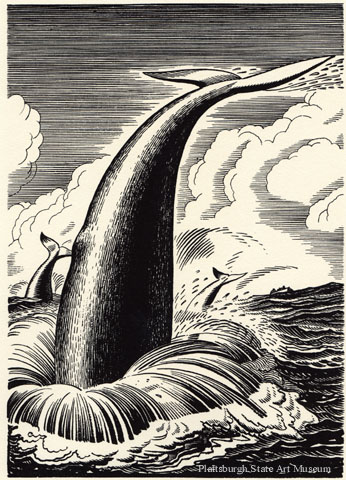
Here is something I need to remember for future reference: my mother does not like Moby Dick as much as I do. The truth: she pretty much hated every minute reading Moby Dick for her class at Harvard. What she had to say about the pleasures of cetological lore does not exist. What she disliked about whale minutiae and viscera would fill the brain of a sperm whale to capacity. (And yes, the sperm whale brain, at 17 pounds, is five times larger than the human brain and has a volume of 8000 cubic meters.)

The only good thing about Moby Dick, as far as my mother is concerned, so far as I can tell, is the fact that the Pequod’s first mate’s name is Starbuck, he of “deep natural reverence [and] wild watery loneliness”, and this means that every time she passes a Starbucks coffee shop she can allude to this convergence of names, each time as if for the first time. Given that there are 13,279 Starbucks in the USA alone, this is an opportunity unlikely to expire. (The founders initially wanted to name their company Pequod, which I would have voted for; this gives you an idea of my business savvy.)

I, on the other hand, consider Moby Dick to be the greatest American novel and one of the funniest novels ever; the novel that keeps on giving. I like Moby Dick so much that I wrote a short story about a character who may or may not resemble the writer, who is obsessed with Moby Dick and spends an entire summer - a summer rife with dramatic life changes – alluding to Melvillian wit and wisdom. (You can read this story, “No I am not a Loose Fish, and Neither Are You”, in the 2006 issue of the Southwest Review,Volume 91,Number 3, which, alas, is not available on line.)

So why did my mother find herself reading Moby Dick?
My father loved taking classes and he loved to be around interesting people. And if there were no interesting people on hand, he was happy to be around uninteresting people. He liked to be around people, and he didn’t much like being left alone. He loved school as a young man, and excelled; his only complain about his undergraduate years at Harvard was that his time there was too brief, having been interrupted by his service during WW2.

My mother likes to give lectures and generally prefers to be around very few people, for short periods of time. Some people she would prefer to never be around.

In the decade before he died Dad enrolled at HILR, Harvard Institute for Learning in Retirement, which allowed him to take classes about current events, environmental degradation, Shakespeare’s plays and modern novels, and be around people. A good day at HILR involved a class discussion on Islam and Petroleum, lunch with an attractive female grandchild and her attractive roommates, then an afternoon class tracing the causes of Climate Change to the Protestant Reformation. He once took a course called the “Traditions of Mysticism and Christianity and Islam” and called me once a week to explain the reading and, please, to write a prĂ©cis of the 800 page tome assigned that week. But he kept going to class. Only a national emergency or death could stop him from going to class and lunching with an attractive granddaughter.

The only course he actively resisted taking was “This is Your life: Memoir Writing”, and it was the one course above all others I begged him to take.

But for all their love and devotion, my parents were apparently clueless about each other’s social preferences. Which explains why my father persuaded, urged, hectored and implored my mother to join him in taking classes at HILR. Naturally he wanted her company – even though they wisely never took the same course. He also believed, or wanted to believe, that after his death - and he knew quite well he would predecease her, and soon - she would enjoy the classes and the collegiality of HILR. Even his children, their children, could have told you this was delusional.

Nowadays, my mother likes to tell people she took the Moby Dick class because Philip chose it, and she wanted to honor his choice. I don’t contradict her. But in fact she didn’t even look at the catalog until after his death. I know because I was there with her, and in the matter of taking classes, I am more like my father than my mother, so I was drooling over possibilities like the “Philosophy of Yoga”; “T.S. Eliot, Evelyn Waugh and Other Catholic Converts”; “Anti-Matter and Alexandrine Meter”; “The Last String Quartets of Beethoven”. You get the idea.
And so I must take responsibility slash blame for my mother signing up for Moby Dick, and “The Philosophy of Yoga”. (She dropped the P of Y after the second week.) But she stuck with Moby Dick, more or less. More, because she never actually dropped out. Less, because she never finished the book and so never got to Chapter LXXXIX on “Fast-Fish and Loose-Fish”, in which all of jurisprudence and human history is explained, brilliantly and hilariously, in the context of harpooned whales.

Something else I would do well to remember in the future: just because we have the same taste in chocolate and shoes does not mean that my mother and I will find the same books, or classes, interesting. Moby Dick could be the 63-ton tip of that iceberg.